
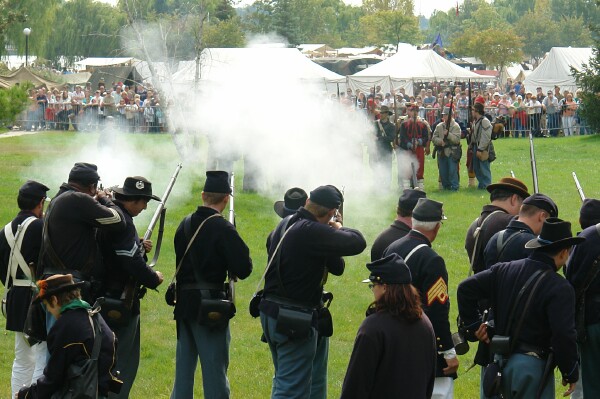
Spectators get up close view of Civil War Battlefield Historic Society Holds 20th River Of Time
|
||||||||||||||||||||||||||||||||||
| Printer Friendly Story View |
Twenty one years ago Bay City Commissioner Tom Lock suggested the idea of holding a reenactment in Bay City, said Dan Chapman in the opening article of the River of Time Gazette. A group met upstairs in City Hall and hashed out the plan that became the annual River of Time on Bay City's River Front.
The idea took hold and became a premier event for reenactors from all across the state and farther. Where the typical reenactment covers a specific time period, the Bay City event covers the entire history of the state from Native American days to Colonial times, the Civil War and now WWII.
This 20th anniversary of the River of Time suffered from overcast skies and a slight drizzle on Saturday, but the sun was out and things couldn't have been better on Sunday. The grounds were alive with spectators and reenactors alike for a grand wrap up to a great weekend.
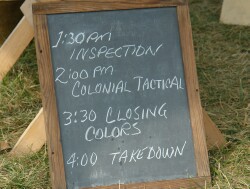
The entire event is free of charge to the public. But that doesn't mean there's not a cost. The committee from the Bay County Historical Society works hard to raise the funds necessary to make this event happen. Sale of souvenir news papers, and other items help, but the real source of funds is cash donations from visitors at the gate.
Citizens of Bay County should be very proud of this great event and all the hard work of the Bay County Historical Society and the River of Time Committee. On behalf of everyone, MyBayCity.com sends out a big THANKS to all the volunteers!
(To become a member of the Bay County Historical Society, call the Museum office at (989) 893-5733)
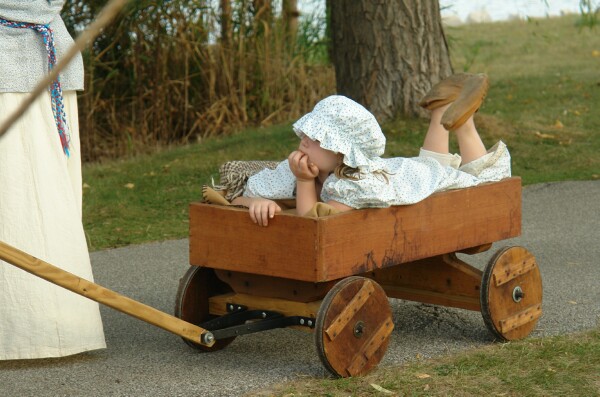 One of the better ways to tour the encampment.
|
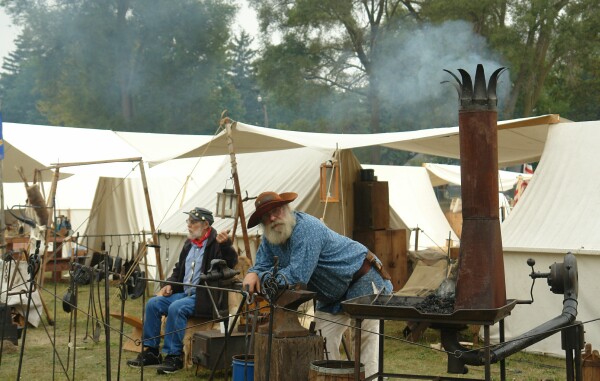 Blacksmiths make all kinds of iron camp ware to sell to both spectators and to reenactors
|
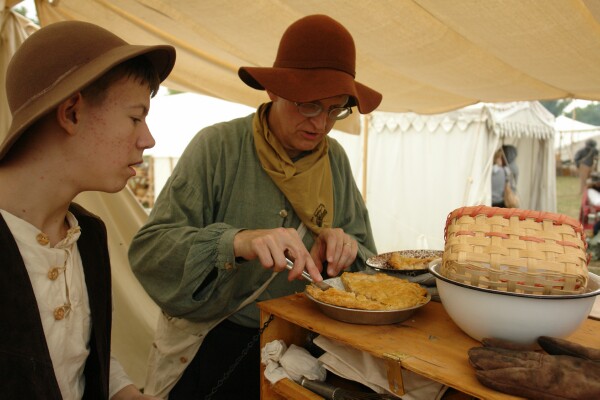 Valiant Jones of the Mormon Battalion cuts one of the many pies he just took out of his rows of dutch ovens by the fire. The Mormon Battalion formed in 1845 to fight in the US/Mexican War. They are said to have made the longest overland military march in history. They helped establish San Diego and San Francisco, built the flour mill where California gold was discovered and blazed the trail over the Sierra Nevada Mountains used in the 1849 Gold Rush.
|
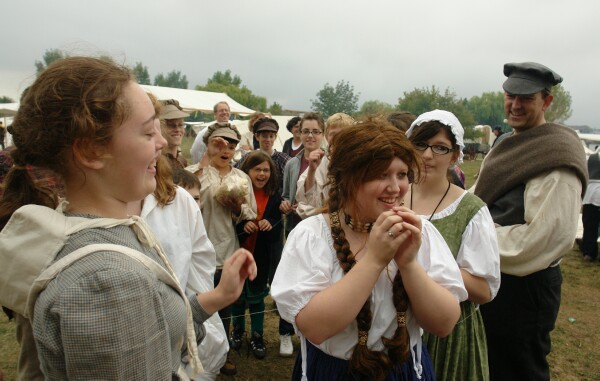 Young people joined in many games from various time periods.
|
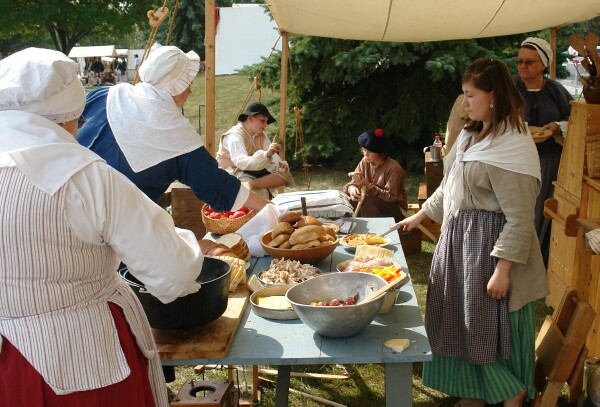 The women of the 42nd Royal Highland Regiment (1756-1763) prepare the noon meal on Sunday.
|
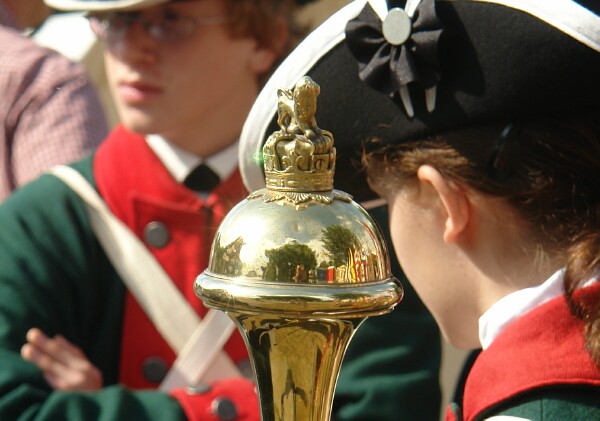 Drum Major's baton from the Tittabawassee Valley Fife & Drum Corps who re-enact the Continental Marines of 1775-1783.
|
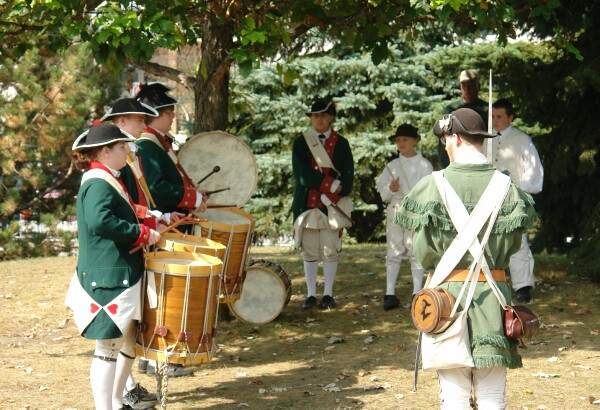 Tittabawassee Valley Fife & Drum Corps drummers practice cadences to the delight of the crowd.
|
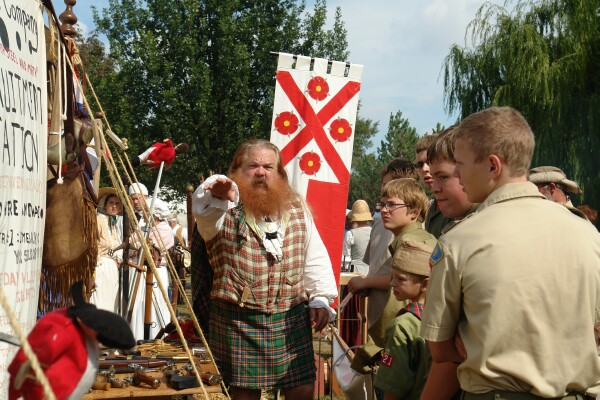 The ever popular Elliot McFralane talks to a group of Scouts about the ways of battle during his period. His "Mcfralane's Company Recruitment Station" entices raw recruits with slogans like "Meet death with steel and mirth" and "No quarter given none asked".
|
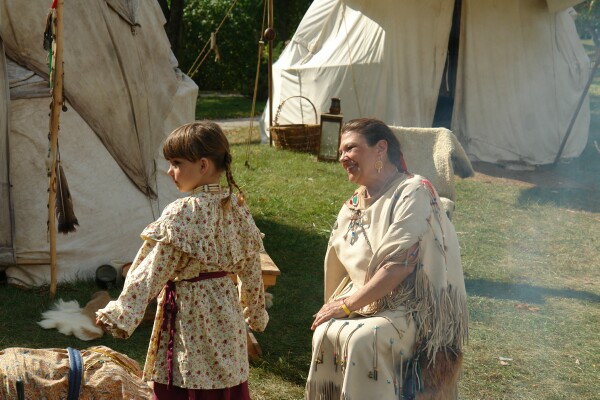 The Native American timeline anchors the south end of the encampment.
|
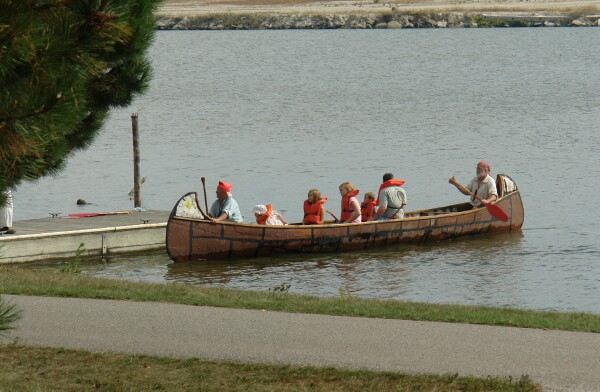 The Sanford Voyager Brigade represent the Great Lakes Fur Trade Era of 1670 to 1870 when the fur trading companies like the Hudson Bay Company hired French Canadians to transport furs and trade goods from the inland trading posts in Western Canada and the US to the East Coast cities. These hardy souls use canoes ranging in size from 28 to 40 feet. With crews of 6 to 8 men they could carry 5,000 pounds of freight along with the men and their provisions.
|
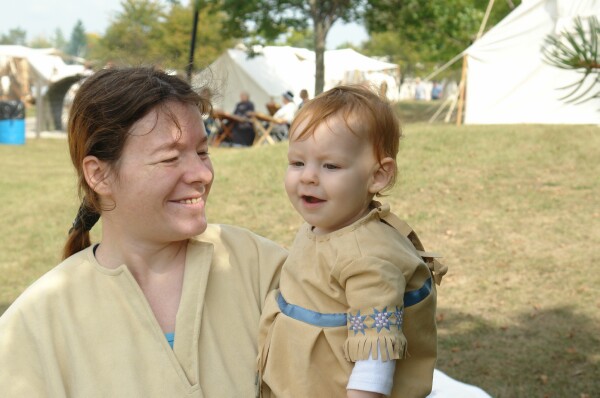 Tanya Prieur and one year old Fae represented Native Americans and demonstrated the pelts and furs of animals traded in 1700 and 1800's.
|
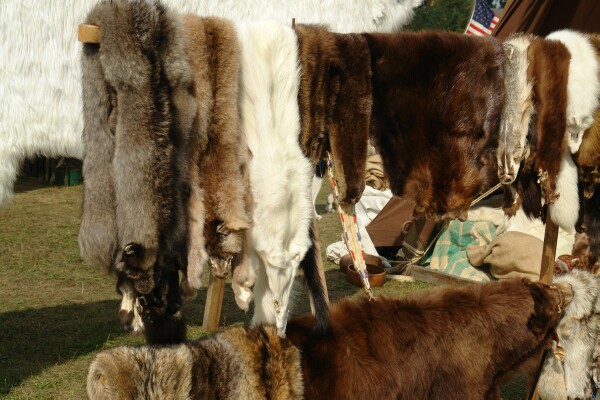 Some of the many furs and pelts on display at various camps. The exhibit also showed the typical fur trapper and trader's camp, along with the tools of the trade.
|
|
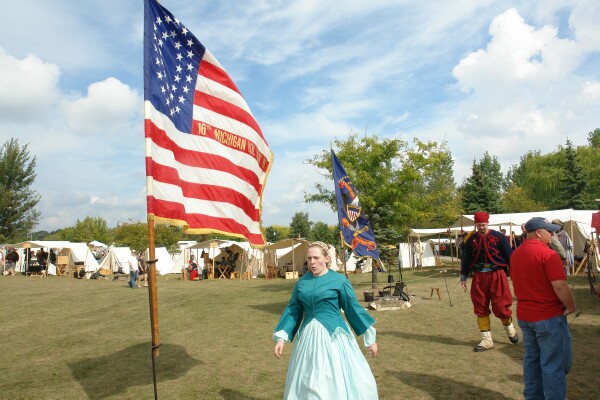 Flags of the 16th Michigan Regiment Infantry at the Michigan Living History Education Association's camp.
|
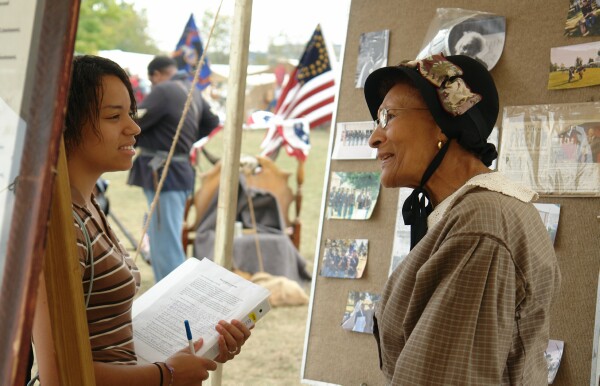 Mary Ann Singleton of Detroit tells Central High's Adrianna Mysliwski about the history of the Underground Railroad. Mary Ann also talked about the importance of learning your family history. As families scatter in our mobile society that history is gradually lost. She said "It's easy to start. Write down your name, your brothers and sisters and your parents. Then add your grandparents and work back. Keep track and pass the information down."
|
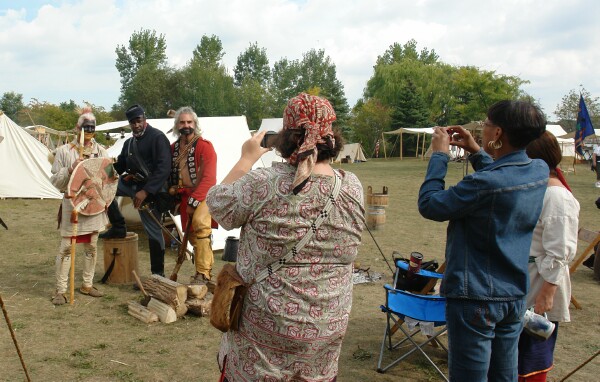 The River of Time is a photographer's delight.
|
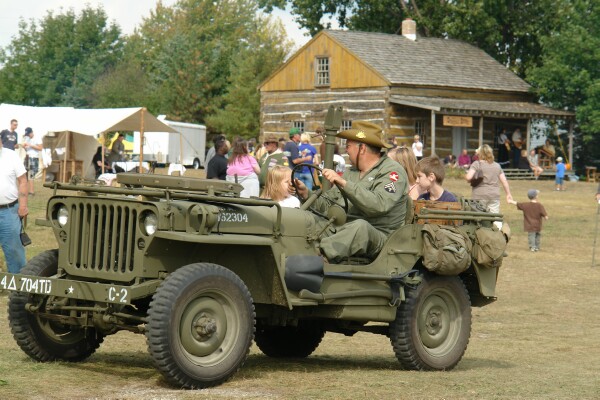 Kids get a ride in a WW II jeep, one of the few motor vehicles allowed to drive in the encampment. Other vehicles including the Vietnam war Uncle Meat gun truck were on display at the North end of the encampment.
|
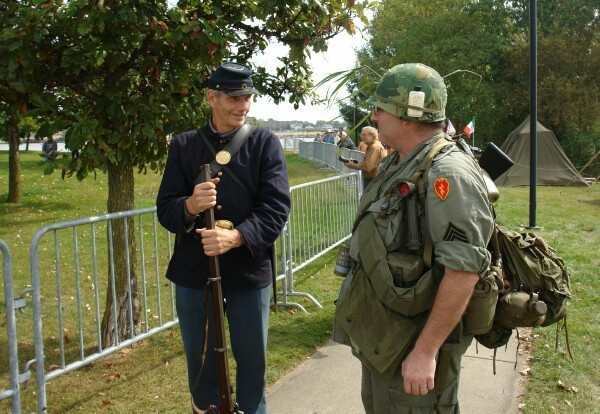 Soldiers of two great wars discuss what life was like in those days.
|
Take any of these links for prior year coverage:
2018.a, 2018.b
2017.a, 2017.b, 2017.c,
2015, 2014, 2013,
2012, 2011, 2010, 2009,
2008, 2008, 2008, 2008,
2007, 2007,
2006, 2006,
2005, 2005, 2005,
2004, 2003,
| Printer Friendly Story View |
|
Prior Article
March 5, 2025 by: Stephen Kent St. Patricks Parade 2025 - IT's TIME |

|
Next Article
February 10, 2020 by: Rachel Reh Family Winter Fun Fest is BACC Hot Spot for 2/10/2020 |
"The BUZZ" - Read Feedback From Readers! |
|
michkreger Says:
On December 27, 2016
at 08:07 PM
Hello, My relative "John Trarop (1833-1894)" served in the civil war under the 16th regiment, MI inf, Union A (M545 R0043), and i can't seem to find anything about him. Would your association have any info on soldiers?
Thank you! ` michelle kreger of nc |
|
|

Stephen Kent |
|
|
|
Printer-Friendly Story View
0200 Nd: 09-15-2026 d 4 cpr 0
12/31/2020 P3v3-0200-Ad.cfm
SPONSORED LINKS
12/31/2020 drop ads P3v3-0200-Ad.cfm